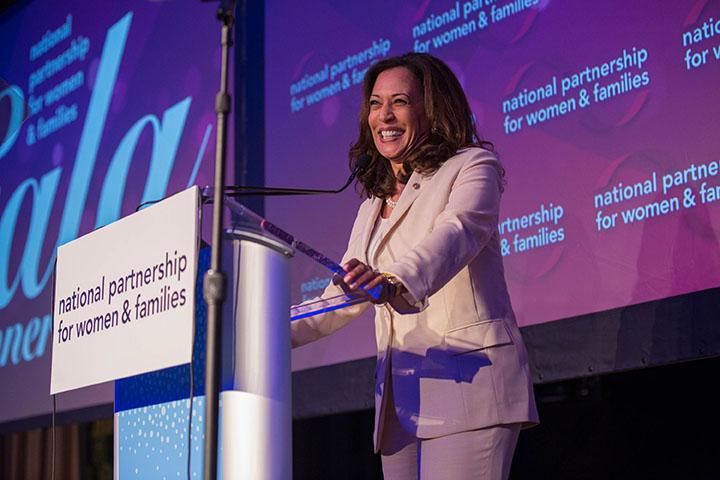
That’s why the National Partnership for Women & Families, the advocacy organization that authored the original FMLA law, as well as other groups, has continually worked to improve and expand it.
New Poll: As the Nation’s Unpaid Leave Law Turns 23, Nearly Four in Five Voters Agree It’s Important for Paid Family and Medical Leave to Be Next
Organization Behind the 1993 FMLA Releases New Poll Results, Q&A Guide to the Law
EEOC Seeks to Require Summary Pay Data From Employers – Bloomberg BNA
The National Partnership for Women and Families in Washington hailed the EEOC’s action as “very welcome” news. With the new data, the EEOC and the DOL “will be much better able to identify and stop wage discrimination of all kinds,” Debra Ness, the partnership’s president, said in a Jan. 29 statement.“This is a bold, important step that will capture salary data from employers that collectively employ more than 63 million workers,” Ness said, adding that there’s “no time to waste” in combating the pay gap.
EEOC Action on Pay Data Collection is a ‘Bold, Important Step’ That Can Help Identify and Stop Wage Discrimination
Statement of Debra L. Ness, President, National Partnership for Women & Families
The Work-Life Balance Goes to Court – The Nation
“The top reason why people don’t use the FMLA when they need it is because they can’t afford an unpaid leave,” says Vicki Shabo, vice president of National Partnership for Women and Families. Meanwhile, workers have even more limited access to the unicorn of work-family accommodations, paid family leave. According to National Partnership, “Only 13 percent of workers in the United States have access to paid family leave through their employers.”
As Nation Marks 43rd Anniversary of Roe v. Wade Decision, ‘There Could Not Be More At Stake for Women’s Health’
Statement of Debra L. Ness, President, National Partnership for Women & Families
Maternal Health Advocates Urge Insurers To Cover Costs Of Birth Doulas – Illinois Public Media
Other benefits include a 9 percent reduction in the use of any pain medications, a 31 percent reduction in the use of synthetic oxytocin to speed up labor, and a 34 percent reduction in reporting a negative birth experience, according to Carol Sakala from the National Partnership for Women and Families.
Hilton offers paid parental leave to all employees, including hourly workers – Washington Post
“We’ve seen incredible momentum on the issue of paid leave,” said Vicki Shabo, vice president of the National Partnership for Women & Families, a District-based nonprofit. “Private sector companies are adopting new policies, and although two weeks falls way short of what working parents need, it’s a great start.”
Women’s Leader Says President Obama Offered a Vision for a Fair, Strong, Successful Country Tonight
Statement of Debra L. Ness, President, National Partnership for Women & Families
When a Big Baby Isn’t So Big – New York Times
The study, called Listening to Mothers III, was based on Childbirth Connection’s nationally representative survey of some 1,960 new mothers. It found that four out of five of the mothers who were warned they might have large babies gave birth to infants who were not large, and weighed less than 8 pounds 13 ounces.
Leading Patient Advocates Welcome HHS’ New Guidance on HIPAA
GetMyHealthData Campaign Leaders Hopeful that Clarification Will Help Reduce Barriers that Prevent Patients from Accessing Their Health Data
Women’s Health Leader Applauds Obama Veto, Urges Congress to Stop ‘Prioritizing Politics Over Women’s Health’
Statement of Debra L. Ness, President, National Partnership for Women & Families
HIPAA Changes to Help Patient Access to Health Information – EHR Intelligence
“The guidance released yesterday is an important step forward in helping patients exercise their right to access their health information under HIPAA, including electronically. Our cadre of volunteer ‘tracer’ patients has found that, unfortunately, confusion surrounding HIPAA persists and often means that patients don’t get the kind of access to their health care information they need,” said the campaign’s coordinator Christine Bechtel.
House Vote to Pass Reconciliation Bill Is a ‘Deeply Disappointing Signal for 2016’
Statement of Debra L. Ness, President, National Partnership for Women & Families
For domestic violence victims, paid sick time can be lifeline – Detroit Free Press
More than 43 million Americans don’t have paid sick time, according to the National Partnership for Women and Families.
Paid Family Leave Gains Ground For Private, Public Sector Workers – NPR
This NPR interview features National Partnership Vice President Vicki Shabo.
We’ve Come A Long Way, Baby: The 14 Companies Making Strides In Parental Leave – The Bump
Individual families sharing their stories is the most important part of all of this—more important, even, than these companies’ policies. It’s these stories that are going to make a difference. You can start by sharing your story here with the National Partnership for Women & Families, a nonprofit fighting to make paid family and medical leave available for all working families.
How to Tell Your Boss That You’re Pregnant – U.S. News & World Report
In fact, employees have no legal requirement to tell their boss that they’re pregnant at all – although their changing bodies might eventually betray the news, says Sarah Fleisch Fink, senior policy counsel for workplace programs at the National Partnership for Women & Families, a nonprofit, nonpartisan activist group.
4 Things You Won’t Believe Women Couldn’t Do In 1990 – Bustle
According to a 2008 survey by the National Partnership for Women & Families, only 16 percent do — which just goes to show we’ve got a lot of work to do.
C-Sections Are Best With a Little Labor, a Study Says – New York Times
“When you don’t wait for labor to begin on its own, you cut short all kinds of physiological changes and preparations for birth that are taking place toward the end of pregnancy,” said Carol Sakala, the director of the nonprofit Childbirth Connection programs at the National Partnership for Women & Families. “What is the effect of cutting off those processes so casually on such a large scale?”