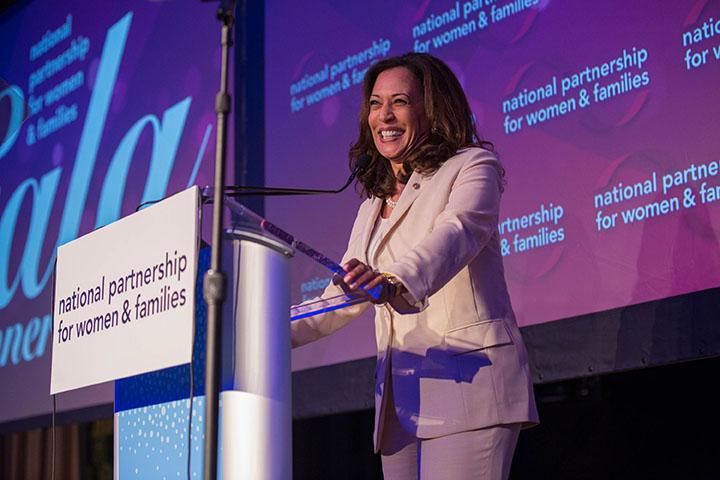
And pregnancy discrimination charges are increasing, with the number of allegations rising by about one-third during the past decade, according to the National Partnership for Women & Families.

And pregnancy discrimination charges are increasing, with the number of allegations rising by about one-third during the past decade, according to the National Partnership for Women & Families.
Some states now give paid time off, including California and New Jersey, according to the National Partnership for Women & Families, a nonpartisan organization. “Everybody, no matter who they work for, what job they have, or what their circumstance, needs access to paid leave,” said Vicki Shabo of the National Partnership for Women & Families.
Consumer advocate Carol Sakala, director of childbirth connection programs at the National Partnership for Women & Families, agreed that standard measures will help consumers make comparisons and new measures are needed to address gaps in quality reporting.
She called the collaborative a good start and said measure development must continue. More work must be done to fill gaps such as measures of care coordination, shared decisions between patients and doctors, and performance on outcomes reported by patients themselves, Sakala said.

Statement of Debra L. Ness, President, National Partnership for Women & Families

When you spend most of your days walking the halls of Congress advocating for policies you truly believe in, you quickly learn that some days are special.
Statement of Debra L. Ness, President, National Partnership for Women & Families
In the last 50 years, the number of cesarean births have multiplied by seven, according to Childbirth Connection. In 1965 the C-section birth rate was 4.5 percent. In 2014, 32.2 percent of births were C-sections, making it one of the most common procedures in American operating rooms, according to Childbirth Connection.
Still, Carol Sakala, director of childbirth connection programs at the National Partnership for Women and Families, a nonprofit policy group in Washington, said there needs to be more discussion about the right balance. “Competent patients have the right to make decisions on behalf of themselves and their babies.’’
That’s why the National Partnership for Women & Families, the advocacy organization that authored the original FMLA law, as well as other groups, has continually worked to improve and expand it.
Organization Behind the 1993 FMLA Releases New Poll Results, Q&A Guide to the Law
The National Partnership for Women and Families in Washington hailed the EEOC’s action as “very welcome” news. With the new data, the EEOC and the DOL “will be much better able to identify and stop wage discrimination of all kinds,” Debra Ness, the partnership’s president, said in a Jan. 29 statement.“This is a bold, important step that will capture salary data from employers that collectively employ more than 63 million workers,” Ness said, adding that there’s “no time to waste” in combating the pay gap.
Statement of Debra L. Ness, President, National Partnership for Women & Families
“The top reason why people don’t use the FMLA when they need it is because they can’t afford an unpaid leave,” says Vicki Shabo, vice president of National Partnership for Women and Families. Meanwhile, workers have even more limited access to the unicorn of work-family accommodations, paid family leave. According to National Partnership, “Only 13 percent of workers in the United States have access to paid family leave through their employers.”
Statement of Debra L. Ness, President, National Partnership for Women & Families
Other benefits include a 9 percent reduction in the use of any pain medications, a 31 percent reduction in the use of synthetic oxytocin to speed up labor, and a 34 percent reduction in reporting a negative birth experience, according to Carol Sakala from the National Partnership for Women and Families.
“We’ve seen incredible momentum on the issue of paid leave,” said Vicki Shabo, vice president of the National Partnership for Women & Families, a District-based nonprofit. “Private sector companies are adopting new policies, and although two weeks falls way short of what working parents need, it’s a great start.”
Statement of Debra L. Ness, President, National Partnership for Women & Families
The study, called Listening to Mothers III, was based on Childbirth Connection’s nationally representative survey of some 1,960 new mothers. It found that four out of five of the mothers who were warned they might have large babies gave birth to infants who were not large, and weighed less than 8 pounds 13 ounces.
GetMyHealthData Campaign Leaders Hopeful that Clarification Will Help Reduce Barriers that Prevent Patients from Accessing Their Health Data
Statement of Debra L. Ness, President, National Partnership for Women & Families