
Blog

After Four Years, It’s Time for Concrete Action – An Executive Order from President Obama – to Help Reduce the Wage Gap

| Jan 29, 2013

(Read time: )

Four years ago today, President Obama signed the Lilly Ledbetter Fair Pay Act – a law that restored pay discrimination victims’ right to have their day in court. It was the first bill the president signed into law, and it has allowed women across the country to challenge unlawful discrimination when they receive a discriminatory paycheck.

The Lilly Ledbetter Fair Pay Act was a critical and necessary step to help combat pay discrimination. But much more remains to be done to help prevent the discriminatory practices that contribute to a wage gap that costs women, on average, 23 cents for every dollar paid to men. Fortunately, there are concrete proposals that Congress and the Obama administration can – and should – advance right away.

Legislation like the Fair Pay Act, which was introduced today by Senator Tom Harkin (D – Iowa) and Delegate Eleanor Holmes Norton (D – D.C.), would help to ensure equal pay for those who hold jobs that require comparable abilities, knowledge and skills. The bill is modeled on similar laws already on the books in a number of states.

The Paycheck Fairness Act, introduced last week by Senator Barbara Mikulski (D – Md.) and Representative Rosa DeLauro (D – Conn.), would also help reduce the wage gap. One critical provision would prohibit employers from retaliating against workers for discussing pay. Nearly half of the workforce is currently prohibited or discouraged from talking about pay with their coworkers, making it nearly impossible to identify and challenge discriminatory practices – and giving employers little incentive to comply with the law.

Lilly Ledbetter’s own experience provides a classic example. After working for 19 years as a supervisor at a Goodyear tire factory where there was a policy that prohibited employees from discussing their pay, she received an anonymous note telling her she was being paid less than her male coworkers with the same job. Goodyear’s policy allowed for discrimination with impunity.

If we are going to eradicate pay discrimination in this country, workers need to be able to discuss their pay without fear of losing their jobs. That is why, in addition to supporting critical legislation, we are calling on President Obama to address pay discrimination by issuing an executive order that ensures that employees of federal contractors can discuss pay without retaliation.

The federal government has an obligation to ensure that taxpayer dollars are not used to perpetuate unlawful pay discrimination. And the president made a point of including equal pay in the vision for the future of America he laid out in his inaugural speech last week.

The Lilly Ledbetter Fair Pay Act marked an important step on the road to fair pay. With an executive order, the administration should take the next step toward an economically secure future for America’s women and their families.

About the Author

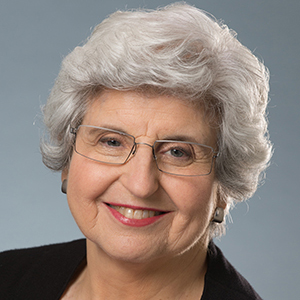
Judith L. Lichtman

Judith L. Lichtman

Judith L. Lichtman has been a guiding and influential force in the women's movement for more than 40 years. She stepped down as president of the National Partnership for Women & Families in 2004, and is presently senior advisor at the National Partnership. Her commitment, vision, and talent as an attorney and advocate have made a profound difference for women and families across the United States.

Lichtman often says: "I went to law school because being a lawyer gave me a license for activism." After receiving her law degree from the University of Wisconsin in 1965, Lichtman worked for the Department of Health, Education and Welfare, Jackson State College, the Urban Coalition, the U.S. Commission on Civil Rights, and as legal advisor to the Commonwealth of Puerto Rico. In 1974, Lichtman became the executive director and first paid staff person for the Women's Legal Defense Fund (WLDF), which became the National Partnership for Women & Families in February 1998.

Under Lichtman's leadership, the National Partnership has been at the forefront of every major piece of civil rights legislation related to women and families for more than 40 years. Founded as a small volunteer group, the National Partnership has grown into a national organization with thousands of members and has become one of the country's most influential strategic forces, shaping national policy through its advocacy, lobbying, litigation, and public education. Lichtman's vision and the National Partnership's strength and direct leadership have resulted in the passage of some of the most important legal protections for American women and families, including the Pregnancy Discrimination Act of 1978 and the Family and Medical Leave Act (FMLA) of 1993. In 1996, the National Partnership helped shape key provisions of the Health Insurance Portability and Accountability Act (HIPAA) that make it easier for women and their families to get and keep health coverage. More recently, Lichtman has led efforts to promote patient protections and to bring paid family and medical leave to California.

Lichtman has been recognized by civic and legal organizations, business and labor leaders, and others for her strategic abilities, political savvy, effectiveness in creating powerful and diverse coalitions, and her tireless commitment to building a truly just society. President Clinton called Lichtman "a remarkable national treasure," and Washingtonian magazine has identified her as one of Washington, DC's most powerful women and Washingtonian of the Year in 1986. The Sara Lee Corporation awarded her the 1989 Frontrunner Award in the area of Humanities. That same year, the Women's Bar Association named her Woman Lawyer of the Year. In 2000, Lichtman received the Leadership Conference on Civil Rights Hubert H. Humphrey Award for her contributions to the advancement of human and civil rights.

Says Lichtman, "For over 40 years, I've tried to make this world a better place for women and families. We've come a long way, but our work is far from done. My daughters, and all our children, deserve a future where every school and workplace is truly free of discrimination, and where all families have the support they need to succeed at home and on the job. I know from experience – if we can imagine it, we can make it happen."

Lichtman lives in Washington, D.C., with her husband Elliott. They have two married daughters and four grandchildren.