Blog

New Analysis Suggests Lack of Paid Sick Days May Have Prolonged H1N1 Pandemic

| Feb 16, 2010

(Read time: )

New analysis from the Institute for Women’s Policy Research (IWPR) provides support for what paid sick days advocates have long argued: lack of access to paid sick days means employees are more likely to go to work sick, spread contagious disease, prolong the effects of pandemic illness, and harm the public health.

IWPR’s recent briefing paper, Sick at Work: Infected Employees in the Workplace During the H1N1 Pandemic, analyzes illness and employment data from the Fall of 2009, during the height of the H1N1 pandemic. IWPR estimates that although almost 26 million working adults in the U.S. — about 18% of all U.S. employees — were infected with H1N1 from September through November 2009, only about 18 million took time away from work while infected. That leaves just under 8 million workers who went to work ill, spreading the flu to up to 7 million co-workers.

But that is not the end of the story. Workers in the private sector — where 40% lack access to paid, job-protected sick leave — were much more likely to show up for work sick. While over 90% of infected public sector employees (nearly all of whom have access to paid sick time) followed the CDC’s advice to stay home, only about 66% of private sector employees did the same. The result? Private sector employees infected more of their co-workers and, as a result, the pandemic may been prolonged in private workplaces. Extrapolating from IWPR’s data, the secondary costs of the pandemic — workplace inefficiency and low employee morale — would likely have been higher in the private sector as a steady stream of workers slogged to work sick for months on end.

In this economy, many sick workers cannot make the choice between getting better and getting paid. IWPR’s analysis confirms that a national paid sick days standard makes good sense, not just for the workers who would benefit most directly, but for their colleagues, their workplaces, and their communities.

About the Author

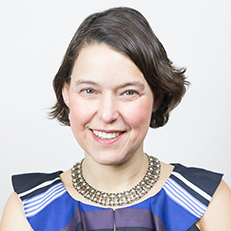
Vicki Shabo

Vicki Shabo

Vicki Shabo is vice president at the National Partnership for Women & Families and is one of the nation's leading experts on paid family and medical leave, paid sick days and the workplace policy advocacy landscape. She previously served for more than four years as the organization's director of work and family programs. Shabo is responsible for the strategic direction of the National Partnership’s work to promote fair and family friendly workplaces and leads the organization’s work on paid family and medical leave, paid sick days, expansion and enforcement of the Family and Medical Leave Act, workplace flexibility, fair pay and pregnancy discrimination. She serves as a contact on workplace policy issues for key national allies, researchers, businesses and state and local advocates and has been quoted in the New York Times, Washington Post, Associated Press, USA Today, CNN and MSNBC, among other outlets.

Shabo brings a unique background in law and politics to her work: Prior to joining the National Partnership in 2010, she practiced law in the litigation department at WilmerHale, a large international law firm. Before embarking on a legal career, she worked with both Celinda Lake and Harrison Hickman, serving as a pollster and political strategist to political candidates, ballot campaigns, advocacy organizations and media outlets. Through this work, she developed research and communications expertise on issues of particular concern to women. Shabo's earlier professional experience includes a stint with the U.S. House of Representatives Judiciary Committee.

Shabo graduated summa cum laude with a Bachelor of Arts in politics and American studies from Pomona College, and holds a Master of Arts in political science from the University of Michigan. She earned her law degree with high honors from the University of North Carolina, where she served as editor in chief of the North Carolina Law Review. After law school, she clerked for the Honorable Michael R. Murphy on the U.S. Court of Appeals for the Tenth Circuit in Salt Lake City.