Legacy giving or planned giving is a meaningful way you can impact the future of women and families while you and your family receive the benefits of smart financial planning. Through your will, trust, or other financial vehicles, you can plan today for impact tomorrow.
Leave a legacy of persistence and progress.
Since its establishment in 1971, the National Partnership has been the driving force behind many landmark advances in gender equity, including securing family and medical leave, strengthening protections for working women and families, expanding access to reproductive health care, and fighting for an equitable healthcare system.
Thanks to your support, the movement for gender, racial, and economic justice has made enormous strides. As we look to the future, we are clear-eyed about the challenges that remain.
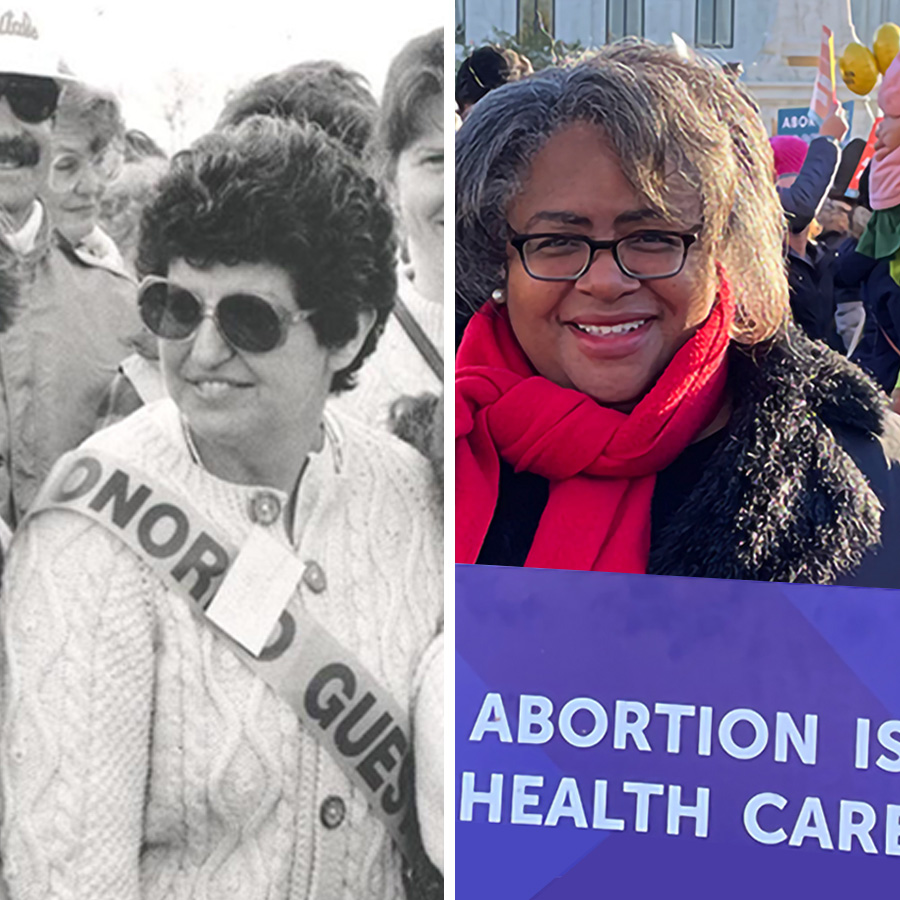
The future holds many possibilities. What will be your legacy?
A planned gift could be your most powerful and lasting contribution, as the fight for gender equity and racial justice continues. By planning today, you can ensure we protect our hard-won gains and fuel the next era of impact.
Your legacy can make a better future for women.
A legacy gift, such as a bequest in a will, is an especially meaningful way to protect women’s progress. Supporters who make a legacy gift join our Legacy Society, a group of like-minded individuals who envision a future of equity, justice, and opportunity for all women and families.
If you choose to leave a planned gift to the National Partnership, or have already done so, please let us know. We would be honored to recognize your extraordinary commitment as a member of our Legacy Society.
Charitable gifts, especially legacy gifts, require thoughtful planning. For a confidential conversation, please call or email our team at development@nationalpartnership.org.
Address and Tax ID
To assist you with your gift and estate planning, the official name, address, and tax ID for the National Partnership is:
National Partnership for Women & Families
1725 Eye Street NW, Suite 950
Washington, DC 20006
EIN/Tax ID: 23-7124915
Deferred Giving – support the National Partnership in the future
- Designating Accounts – Choose the National Partnership as a remainder beneficiary of your life insurance plan, retirement account, bank account, or other assets.
- Bequests – Gifts through your will or trust don’t require any contribution now and enable you to plan for leaving a meaningful legacy in the future.
Immediate Giving – support the National Partnership today
- Qualified Charitable Distribution (QCDs) – Donors aged 70 1/2 and older can decrease their taxable income by donating directly from their IRA.
- Stock Donation – Gifts of appreciated securities can help you avoid capital gains tax and receive a charitable income tax deduction when you itemize.
- Donor-Advised Funds (DAF) – You can provide support through your DAF today and into the future.
Note: This information is not intended as legal, financial, or other professional advice. Be sure to consult a lawyer or other qualified professional for assistance in charitable or estate planning.
Deferred Giving
Designating Accounts
Making a lasting impact today costs nothing and doesn’t require an attorney or advisor. It can take just a few minutes of your time to designate the National Partnership as your beneficiary for many types of accounts, including:
- Retirement plans: 401(k), 403 (b), IRA
- Life insurance policies
- Donor-advised funds
- Commercial annuities
- Bank accounts
When you’re ready, making an organization the beneficiary of your assets is generally straightforward:
- Request and fill out a designated beneficiary form through your employer or your plan administrator. Most banks and financial firms also have beneficiary forms, or they can provide you with suggested language for naming beneficiaries to your accounts. Many forms are available online and can be quickly modified by logging into your account.
- On the beneficiary form, decide what percentage (up to 100%) you would like us to receive and name the National Partnership for Women & Families as the beneficiary. Please use our Federal Tax Identification number:23-7124915 in place of a social security number.
- Once the designated beneficiary forms are in place, the retirement assets will generally pass directly to your beneficiaries (including organizations like us) without issue.
Your investment will help the National Partnership be responsive to the needs of women and families today, tomorrow, and for decades to come.
Bequests
A simple way to establish your legacy is to designate the National Partnership for Women & Families as a beneficiary of your will and trust. You can designate a specific dollar amount, a particular asset, such as securities or leave a percentage of your estate, or the residual of your estate, after providing for loved ones.
Specific Bequests allow you to designate a percentage of your estate, a dollar amount, or specified assets as a gift to the National Partnership.
Residual Bequests allow you to designate the remaining residue of your estate as a gift, after the payment of all expenses and specific bequests to other beneficiaries have been made.
➤ Download sample language and more information about bequests
Immediate Giving
Qualified Charitable Distribution (QCDs)
A qualified charitable distribution (QCD) directly transfers funds from your IRA to a nonprofit like the National Partnership. If you are 70½ or older, a QCD can count toward your required minimum distribution (RMD) and reduce your taxable income—even if you do not itemize your deductions. In 2025, you can donate up to $108,000 directly from your IRA.
To make a QCD:
- Contact your IRA plan administrator to request a distribution to the National Partnership for Women & Families and send it to the following address:
National Partnership for Women & Families
P.O. Box 646037
Pittsburgh, PA 15264-6037 - Ask your administrator to include your name and contact information with the gift so we can properly acknowledge your generosity.
- Please email development@nationalpartnership.org if you wish for your gift to be used for a specific purpose.
Please note: QCD gifts do not qualify for a charitable deduction but may reduce your taxable income.
Questions? Contact us.
Stock Donation
If you’re looking for a tax-smart way to leave your legacy, consider a gift of stock. When you donate appreciated securities that you’ve owned for more than one year, you can avoid capital gains tax and receive a charitable income tax deduction when you itemize.
Donor-Advised Funds (DAF)
A donor-advised fund (DAF) is a charitable investment account that allows you to contribute cash, stocks, or other assets, receive an immediate tax deduction, and recommend grants to nonprofits like the National Partnership over time. DAFs are one of the easiest and most flexible ways to manage your philanthropy.
You can support the National Partnership through your DAF in the following ways:
- Recommend a one-time or recurring grant.
- Designate the National Partnership as a full or partial beneficiary of your DAF to extend your impact beyond your lifetime.
By giving through your DAF, you help fuel our mission to advance equity for women and families across the country.
National Partnership for Women & Families
P.O. Box 646037
Pittsburgh, PA 15264-6037
Questions? Contact us.
Contact Us
Please reach out to our team at development@nationalpartnership.org for a confidential conversation about how you can make a personal legacy gift to support our mission.
Phone: 202-986-2600
National Partnership for Women & Families
1725 Eye Street NW, Suite 950
Washington, DC 20006
EIN/Tax ID: 23-7124915
Your personal financial situation is unique, so we encourage you to talk to your financial or legal advisor before making a gift of bequest or creating a legacy through planned giving.
All inquiries are welcome and held in the strictest confidence. You are never obligated to make a gift. This information is not and should not be construed as legal advice. State laws vary. Consult an attorney when preparing your estate and other long-term planning documents.