ICE Has Been Deporting Pregnant and Postpartum Immigrants. Now We Know How Many.
The 19th, March 18, 2026
The Department of Homeland Security (DHS) confirmed that U.S. Immigration and Customs Enforcement (ICE) has detained and deported hundreds of pregnant, postpartum, and nursing immigrants since the start of the Trump administration. Between January 1, 2025, and February 16, 2026, 363 pregnant, postpartum, and nursing immigrants were deported. Sixteen miscarriages were recorded during that time period. In total, 498 pregnant, postpartum, and nursing people were reported as “booked out” of ICE detention in that timespan, meaning that they were detained and then left ICE facilities. As of February 16, 121 people who were actively detained were pregnant, postpartum, or nursing, according to DHS.

How Blue States Got Around the GOP’s Efforts To Ban Abortion in Red States
Mother Jones, March 17, 2025
The abortion-access movement is winning thanks largely to “shield” laws enacted in blue states. In general, shield laws prohibit law enforcement and state agencies from engaging in actions that could help abortion opponents bring criminal or civil cases against abortion doctors, helpers, or patients. So far, 22 states and Washington, D.C., have created some version of shield protections. The laws have proven to be “one of the strongest tools that reproductive freedom advocates have to protect abortion access in a post-Roe reality,” says Ashley Kurzweil, a senior policy analyst at the National Partnership for Women & Families.
Red States Move To Protect Crisis Pregnancy Centers Using Model Legislation
NPR, March 18, 2026
Conservative lawmakers in Wyoming, Kansas, Oklahoma, and Montana are pushing legislation drafted by the Alliance Defending Freedom that opposes abortion to increase protections for crisis pregnancy centers, organizations that dissuade women from having abortions. The legislation would prohibit state and local governments from requiring crisis pregnancy centers to perform abortions, provide referrals for abortion services, or inform patients about such services or contraception options. It would also allow crisis pregnancy centers to sue the violating government entity.
They Didn’t Want To Have C-Sections. A Judge Would Decide How They Gave Birth.
ProPublica, March 14, 2026
During labor, a nurse brought Cherise Doyley a tablet, and on the screen were a judge, several lawyers, doctors, and hospital staff. Doyley was informed that the state of Florida filed an emergency petition to force Doyley to undergo a cesarean section. Pregnancy is the only condition where Florida courts have ruled that a patient can be forced to undergo unwanted treatment. In Florida and many other states, court-ordered medical procedures are just one of the ways pregnant patients’ rights are restricted. The effort to restrict those rights is rooted in the concept of fetal personhood – that a fetus has equal and, in some cases, more rights than the woman sustaining it.
Ohio Bill Would Require Life, Death Certificates for Early Pregnancies
Cincinnati Enquirier, March 17, 2026
A Southwest Ohio lawmaker introduced a bill that would require medical professionals to file a “certificate of life” within 10 days of detecting a fetal heartbeat. Current state law requires doctors to record only a certificate of live birth. The bill would also require that all fetal deaths be registered, with space to list whether the cause of death was an induced abortion, spontaneous miscarriage or stillbirth. Abortion Forward Deputy Director Jaime Miracle said, “This bill would create a statewide registry of pregnancies that could be used by authorities to track pregnancy outcomes.”
ICYMI: In Case You Missed It
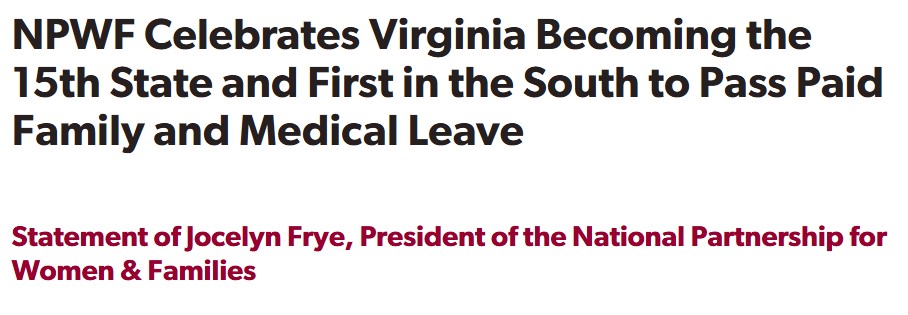
The National Partnership for Women & Families is thrilled to congratulate Virginia on passing a paid family and medical leave law, which will provide 3.2 million Virginians with access to paid time off to take care of themselves or their loved ones.
We respect your privacy. Read our policy.
Note: The information contained in this publication reflects media coverage of women’s health issues and does not necessarily reflect the views of the National Partnership for Women & Families.