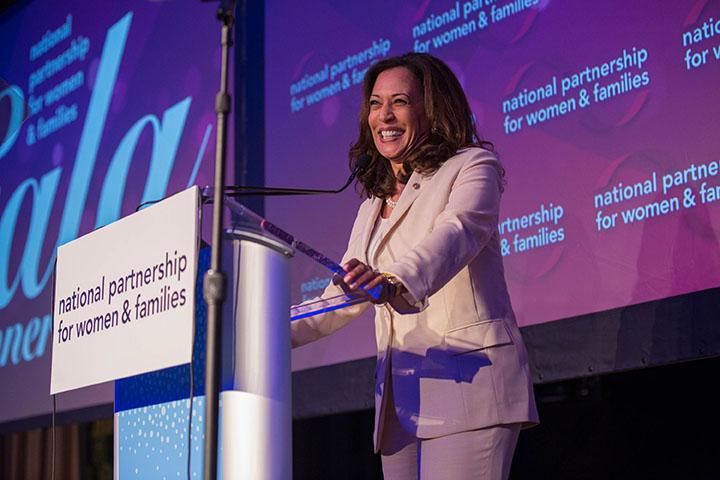
National Partnership for Women & Families joins Congressional leaders on Capitol Hill to reintroduce paid leave and paid sick days, including paid safe leave for survivors of domestic abuse
NPWF Urges Biden and Congressional Leadership to Reject Debt Limit Deal That Would Harm Women and Families’ Health and Economic Security
NPWF President Jocelyn C. Frye sent a letter to the Biden administration and congressional leadership, urging them to oppose a debt ceiling deal…
President’s Executive Order Shows Need for Strong Supports to Help Families Thrive
The National Partnership for Women & Families applauds the Biden administration for taking an important next step toward improving caregiving supports, the quality of care jobs…
What would the economy look like if it worked for women? – 19th News
“Black women often have the highest labor force participation rate of any group of women, yet stereotypes about their desire to work are still pervasive, said Jocelyn Frye, the president of the National Partnership for Women & Families.”
Women needed for U.S. chips manufacturing plan to succeed – New Jersey Monitor
“Sharita Gruberg, vice president for economic justice at the National Partnership for Women and Families, said there will need to be sufficient monitoring and enforcement from the Office of Federal Contract Compliance Programs and Equal Employment Opportunity Commission to ensure that underrepresented workers aren’t being pushed out of jobs due to sexual harassment and discrimination.”
Women of Color Lose Billions Due to White Supremacy – The Tennessee Tribune
The National Partnership for Women & Families is releasing a new report, “Women‚Äôs Work Is Undervalued, and It’s Costing Us Billions,” which details the negative effects of job segregation on women in the workforce, and its particular impacts on women of color and women with disabilities.
On Equal Pay Day, Senators Reed & Whitehouse Call For Passage Of Paycheck Fairness Act – The Newport Buzz
“According to statistics compiled by the National Partnership for Women & Families, across the U.S., women still earn, on average, just 77 cents for every dollar paid to men, resulting in a gap of $11,782 each year‚Äîand the disparity is worse for women of color. In Rhode Island, the average, annual gender wage gap is $10,754, according the National Partnership for Women & Families.”
Happy Equal Pay Day? Here are 6 charts showing why it’s not much of a celebration. – The 19th
“Occupational segregation, the reality that women are concentrated in certain jobs, typically low-paid service sector positions, drives half of the gender pay gap, according to the National Partnership for Women & Families.”
A costly gender gap: Texas women working full time earn $12,000 less than men annually – KERA News
“A new report from the National Partnership for Women and Families digs into some of the causes of these inequities. The biggest driver, according to the report, is “occupational segregation.” The term points to the historical and structural factors that effectively sort women and men toward different fields, driving inequities.”
Analysis: How Far Can Biden Go in Expanding Child Care? – Washington Post
“Women are projected to account for only 29% of the 800,000 jobs created each year by the law, according to the National Partnership for Women and Families.”
Pa. senator becomes 1st to give birth in office, bringing workplace maternity issues to light – KYW Newsradio
“Michelle Feit with the National Partnership for Women and Families says, as more women get involved in politics, more policies will reflect the challenges they face.”
ICYMI: Experts Agree: Chips Manufacturing and National Security Bolstered by Childcare – White House Briefing Room
Sharita Gruberg, Vice President, National Partnership for Women & Families: “The Biden Administration knows work family supports like #childcare are essential to securing America’s role as a leader in technology and manufacturing.”
Long Live Leave: Celebrating 30 Years of the FMLA w/ Jocelyn Frye – Werk Stories
February 2023 marks the 30th anniversary of the Family and Medical Leave Act (FMLA) and president of the National Partnership for Women and Families, Jocelyn Frye, is on talking about the impact of this law on women in the workplace.
The State of Paid Leave in the U.S. – U.S. News & World Report
“The National Partnership for Women and Families, a nonprofit advocacy group, estimated that over 10 million American workers in 2022 needed leave but did not take it. It found that an estimated two-thirds of those workers ‚Äì or about 7 million Americans ‚Äì did not take needed leave because they could not afford it.”
Lack of paid family leave causes families to struggle, organization says – Audacy
“Jessica Mason, a senior policy analyst at the National Partnership for Women and Families, tells KMOX that it’s a big issue, because almost every single person in the U.S. is going to need time away from their job.”
How historic infrastructure investments can benefit women workers – The Hill
Op-ed by Sharita Gruberg, vice president of economic justice at the National Partnership for Women & Families.
The impact of unpaid family & medical leave in Oklahoma – KFOR
“Nearly 1.5 million Oklahoma workers don’t have paid family and medical leave through their jobs. That means 74% of working people in the state, if they’re welcoming a new child or have to take time off work for medical appointments for themselves or their loved ones, are put in the impossible situation of having to choose between their families, their health and their paycheck.”
YOUR LETTERS: FMLA is a stepping stone – unpaid leave isn’t good enough – Labor Tribune
“Led by the National Partnership for Women & Families, the Labor Movement fought in coalition with women’s, disability, children’s, religious and senior citizens’ groups.”
Parents now eligible for 12 weeks paid leave – My Twin Tiers
“According to the National Partnership for Women and Families, without a national paid leave policy and the rising costs of living, states across the U.S. are taking it upon themselves to find a solution.”
Paid Family Leave: A Benefit Helpful to Just About Everyone—So Why So Slow In Coming? – Government Executive
“We heard a lot of stories from federal employees as we advocated for FEPLA several years ago,” Michelle McGrain, director of congressional relations for the National Partnership for Women and Families, told Government Executive.