

Every day, working people across the country wake up already making tradeoffs.
They plan their commutes around childcare drop-offs, take calls from doctors’ offices during lunch breaks, and quietly calculate how many sick days they have left if something goes wrong. For millions of caregivers, work and care are not separate parts of life – they are deeply intertwined, often in ways that leave little margin for error.
More than 30 years ago, the Family and Medical Leave Act (FMLA) was passed because policymakers listened to stories like these. For the first time, federal law recognized a simple but powerful truth: workers are also caregivers, and no one should have to risk losing their job simply because they need time to care for themselves or a loved one.
Since its enactment, FMLA has been used about 566 million times, offering job protection at critical moments for families across the country. That legacy is worth honoring. But as we mark this anniversary, it also underscores a harder reality: job protection alone is not enough.
FMLA: A Landmark Achievement and a Launching Pad
Thirty-three years ago, the FMLA was passed because people told their stories – of navigating becoming a parent without leave, illnesses managed without support, and families stretched thin by care responsibilities. That human voice was then, and remains today, a powerful tool for progress and action.
FMLA established a critical principle: when you or someone you love experiences a serious health issue or needs care, your job shouldn’t be at risk.
But unpaid leave, while important, isn’t enough. For millions, unpaid leave is something workers can’t afford to use at all. When caregivers must choose between income and care, the principle becomes hollow and the promise incomplete.
Advancing Business Leadership Where Policy Leaves Gaps
Employers are facing intensifying workforce challenges – from retention to recruitment to engagement – and caregiving pressures are rising alongside them. A growing body of evidence shows that U.S. workplaces are not structured around the realities of caregiving: rigid schedules, diminishing flexibility, and unaffordable childcare are pushing people, especially women, out of careers they want to build and maintain.
That’s why initiatives like AdvancingPaidLeave.org matter. This platform isn’t just another website, it signals a shift: employers are stepping up not merely as stakeholders but as leaders in shaping what meaningful paid leave can look like in real workplace practice.
Leadership means demonstrating what’s possible, sharing proven practices, and building momentum so that caregivers and employers alike can thrive.
When Storytelling Brings Policy to Life
Statistics tell us what is happening; stories tell us why it matters.
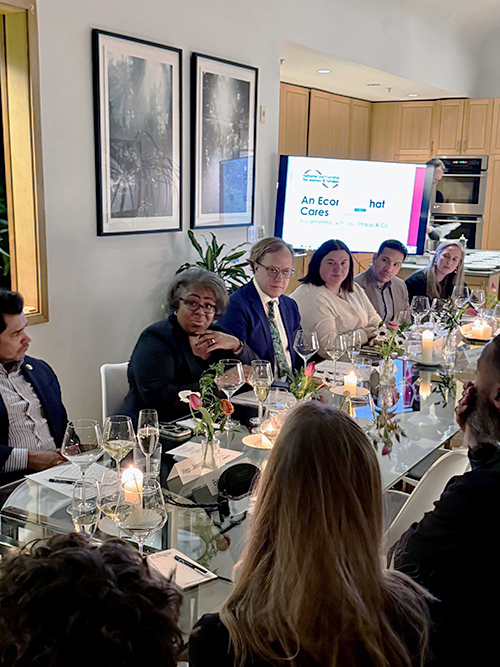

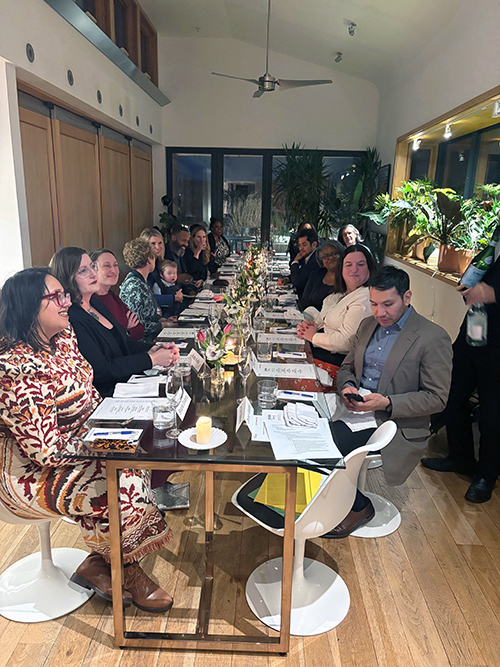
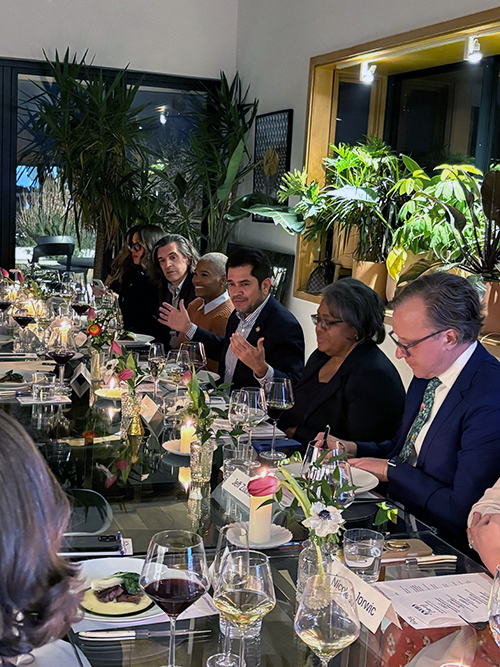
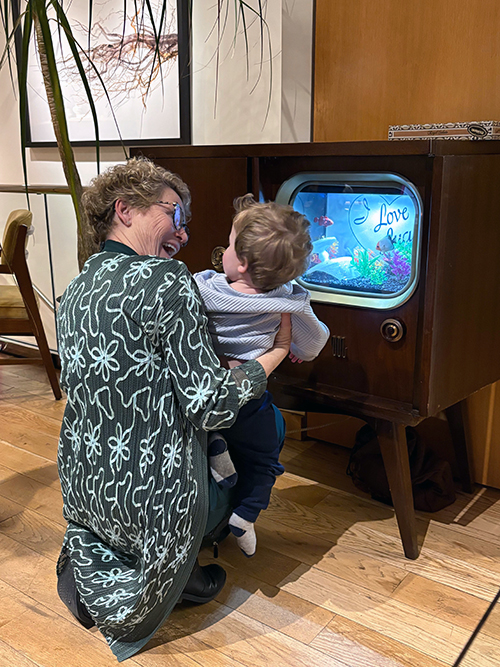
In honor of the FMLA’s anniversary, the National Partnership and Levi Strauss & Co. hosted a cross-sector dinner discussion focused on caregiving and storytelling, highlighting the powerful stories captured by Caregiving, a documentary by PBS and produced by Bradley Cooper. We welcomed Congressional champions including Representatives Gomez, Houlahan, and Pettersen (and her little boy, Sam); companies leading on workplace investments including Accenture, Etsy, Deloitte, JPMorgan Chase and Volkswagen; along with advocacy leaders such as Care Can’t Wait and Paid Leave for All. Together with members of the PBS and Caregiving production team, we reflected on care as both a deeply personal and deeply economic issue, the gaps between real life and our systems, and imagined what’s possible moving forward. The powerful clips from the film also allowed leaders to hear directly from people whose everyday lives were shaped by the current policy landscape.

One recent survey from 2025 found that nearly half of all full-time workers now juggle caregiving responsibilities alongside their jobs – up sharply from prior years – and many make employment decisions based not on ambition, but survival. When care isn’t supported at work, people are forced into impossible choices between earning a living and caring for loved ones.
Personal stories make that reality impossible to ignore.
Policy, Practice, and People: A Path Forward
The FMLA anniversary isn’t just a milestone, it’s a moment for reflection on how far we’ve come and how far we still have to go.
Paid leave must be:
- Policy-strong, ensuring protections are meaningful and accessible.
- Practice-proven, with employers demonstrating leadership and real implementation.
- People-centered, amplifying those whose lives are most affected.
When these come together – policy that protects, employers who lead, and stories that remind us why care matters – we don’t just mark progress, we accelerate it.
Care doesn’t stop. Neither should the support workers need to provide it.