

Three months ago, we gathered to mark the 33rd anniversary of the Family and Medical Leave Act – and to ask an honest question: is job protection enough? The answer, resoundingly, was no.
Most recently we came together, for Mother’s Day, with a sharper focus on one of the most urgent, preventable crises in our country: maternal health.
The data is stark. The U.S. has the highest maternal mortality rate among developed nations. Black women are 3.5 times more likely to die from pregnancy-related causes. One in five women will experience a maternal mental health condition – most without treatment. And here’s the fact that really hurts to read: 86% of these deaths are preventable. We aren’t failing mothers because we lack the knowledge, we’re failing them because of a lack of political will.
That’s what brought a remarkable group of cross-sector leaders to the table: Congressional maternal health champion Representative Lauren Underwood, senior executives from companies including Microsoft, Salesforce, Levi’s, and Volkswagen, and leaders from the Institute for Women’s Policy Research and Reproductive & Maternal Health Compass – all gathered to reflect, share, and commit to what comes next.
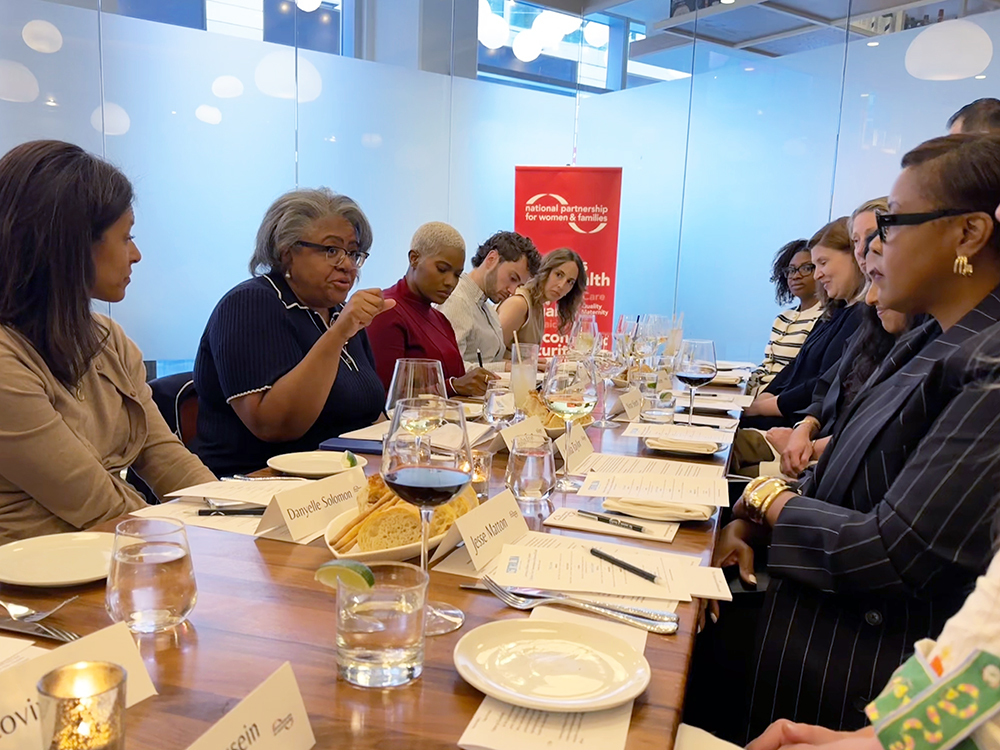
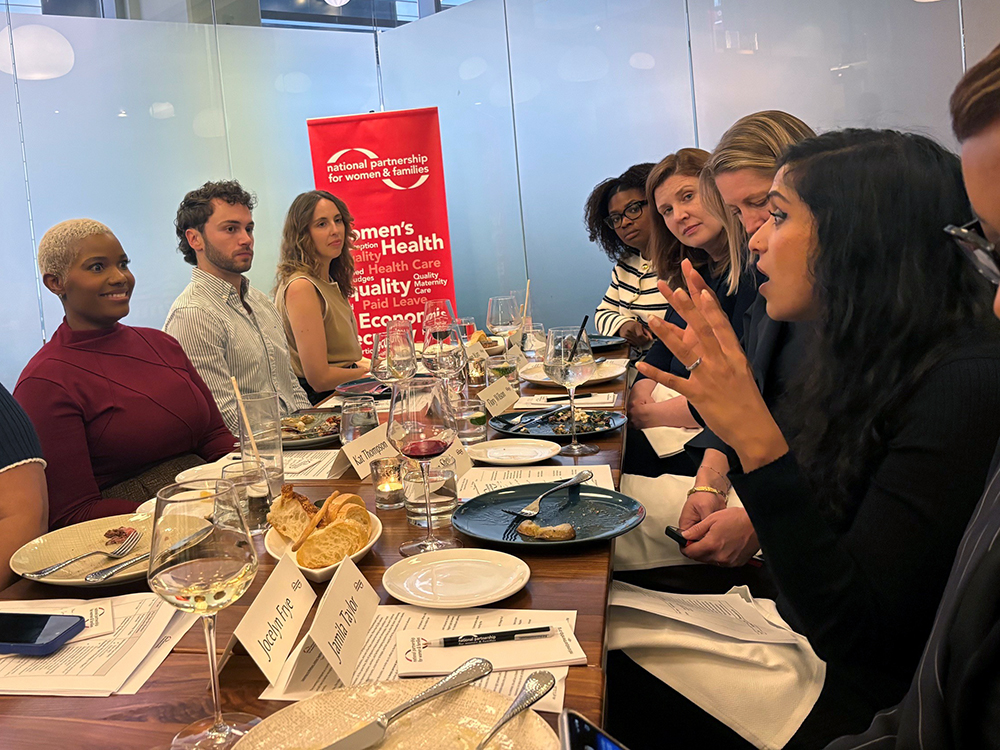
The conversation was candid, moving, and at times deeply personal.
Stories and data, together, are catalysts.
There was distinct recognition around the table that the power of this issue lies in the combination: data that establishes the scale, and lived experience that makes it impossible to look away. Numbers tell us what is happening, stories tell us why it must change, and research and lived experience show us the way forward.
Policies must evolve to meet the moment: this country is facing a maternal health crisis.
One of the most honest moments of the evening was shared acknowledgment: Human Resource (HR) leaders are stretched thin. When teams are managing compliance, retention, and a growing list of workforce demands, proactive strategy becomes a luxury. The result? Internal workplace opportunities that could be game changers for maternal health, from doula and midwifery coverage to mental health support, left unrecognized or underutilized.
The business case is real and it’s urgent.
Maternal morbidity conditions cost the U.S. $32.3 billion from conception through a child’s fifth birthday (for all births in a single year). Of this, maternal mental health conditions alone account for $18.1 billion. These numbers reinforce that these issues are impacting not only your bottom line, but your employees well-being directly. Add to that: one third of new parents leave their jobs within 18 months of welcoming a child. Importantly, only 4 percent are leaving the workforce entirely. The opportunity for retention tools, including return to work programs and manager training, allows employers to not only support their employees back to the workplace, but avoid costly turnover.
For large employers, competitive hiring and retention aren’t abstract concerns. Maternal health benefits – including midwifery, doula support, and mental health care – are increasingly part of what differentiates employers. Leaders noted the growing availability of coverage options, through state Medicaid coverage and private insurers, and the momentum (and data) behind doula and midwifery care as tangible, evidence-backed supports that employers can act on now.
The risk of doing nothing is itself a risk.
Several leaders named what often goes unsaid: we are in a particular moment politically and culturally, and that moment will shift. The employers who are building the infrastructure, relationships, and practices now will have the credibility – and the standing – to lead when the pendulum swings. Doing nothing is a choice.
Community matters.
One idea that surfaced: engaging directly with Employee Resource Groups (ERG) on maternal health. ERGs are often where the lived experience actually lives inside a company – where employees are talking about what they’re going through, what they see their colleagues going through, what they need, and where policy is or isn’t working. Meeting people where they are isn’t just good practice, it’s how companies actually learn what their policies mean on the ground.
In February, we talked about the gap between job protection and income support. Last week, we talked about the gap between knowledge and action. The throughline is the same: we know more than we’re doing.
What makes this moment feel different – and worth the cautious optimism – is who is at the table. These aren’t just stakeholders. They’re leaders with the organizational influence and cross-sector relationships to move things. And increasingly, they’re asking the right question: not “should we act?” but “what does acting actually look like for us?”
The next steps look different for everyone in that room: an internal audit of where benefits fall short on care, access, and education, a conversation with an ERG to hear directly from employees navigating these realities, a sharper business case to bring to leadership, or a public policy fight worth joining – from paid leave to maternal health legislation. Each entry point is different, but each one moves the needle.