Abortion Bans, Restrictions Could Cost U.S. Economy $140 Billion: New Report
Rewire News Group, June 16, 2026
A new report from the Institute for Women’s Policy Research, a national think tank focused on economic equity and eliminating barriers for women, estimates that the 16 states with the most restrictive abortion policies are responsible for more than $68 billion in annual lost earnings. In places like Alabama, Louisiana, and West Virginia, abortion bans have pushed women out of the workforce, diminished their earnings, and limited job growth, the report found. Removing reproductive health-care barriers could result in an estimated 325,000 more women aged 15-44 participating in the workforce each year, the report shows. That could boost the national gross domestic product of the entire country by 0.5 percent.

People ‘Don’t Want To Drink Abortions’: Republican AGs Make Bizarre EPA Request
HuffPost, June 16, 2026
Over a dozen Republican attorneys general from primarily red states are urging the U.S. Environmental Protection Agency to classify the abortion drug mifepristone as a drinking water contaminant. The 14 state officials wrote in a Friday letter to EPA Administrator Lee Zeldin that increased access to mifepristone is “resulting in tons of chemically tainted medical waste being flushed into American waterways.” The letter further supports a growing idea on the anti-abortion right that drinking water is being tainted because people using abortion pills are flushing drug remnants and fetal remains down the toilet.
Abortion Rates Continue To Climb as Telehealth Reshapes Post-Dobbs America
Ms., June 17, 2026
Four years after the Supreme Court handed states the power to ban abortion, a striking paradox has emerged: Abortion rates are rising. Since Roe v. Wade was overturned in 2022, the number of abortions in the U.S. has increased over 20 percent, according to the Society of Family Planning’s latest #WeCount report, released June 10. The monthly average number of abortions inside the medical system climbed from 79,560 per month on average in 2022 to 93,900 per month on average in 2025.
Wyoming Judge Strikes Down Three Abortion Restrictions as Unconstitutional
Wyoming Public Radio, June 12, 2026
A Natrona County court struck down three of the state’s abortion restrictions. This doesn’t change much on the ground, since the laws were already temporarily blocked, but it does make them unconstitutional. The June 12 order includes a law which required abortion seekers to get an ultrasound 48 hours before ending their pregnancies. Another required abortion clinics become ambulatory surgical centers, which means making certain building renovations and getting admitting privileges at a local hospital. The last one excluded the use of abortion pills for off-label uses.
Planned Parenthood of Alaska Sues State for Requiring in-Person Visits for Medication Abortion
Alaska Public Media, June 15, 2026
Planned Parenthood is suing the state to expand access to abortion medication via telehealth. Under Alaska law, people seeking a medication-induced abortion must go in person to a clinic, which is usually limited to Anchorage or Fairbanks … Dr. Colleen McNicholas, chief medical officer for the Planned Parenthood affiliate, said medications are only an option for patients who have been pregnant fewer than 12 weeks, and she says in Alaska, the burden of travel to a clinic makes medication abortion too difficult to access.
ICYMI: In Case You Missed It
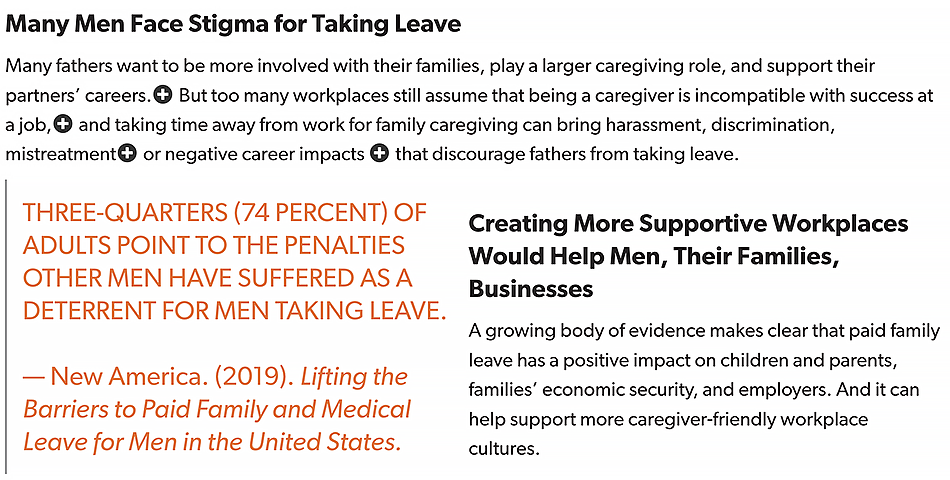
Men increasingly want to be involved parents and caregivers in their families, and while their unpaid caregiving is worth more than $410 billion annually, most men still do not have access to paid family leave. Paid leave allows men to take time away from work after the birth or adoption of a child or to care for a loved one with a serious health condition. Even when their employers provide some paid leave, it often is not fully gender-neutral or inclusive of all family structures. As a result, men must often forgo leave or take shorter periods than they need to avoid losing income and facing workplace stigma.
Read the report here.
We respect your privacy. Read our policy.
Note: The information contained in this publication reflects media coverage of women’s health issues and does not necessarily reflect the views of the National Partnership for Women & Families.