

On July 21, the EEOC voted 2-1 to propose rescinding the EEO-1 report – the annual workforce demographic data collection that has run, in some form, since 1966. The proposal was published in the Federal Register on July 23, the public comment window is open now with comments due August 24. None of it is final: this is a proposed rule that still has to go through notice-and-comment before anything changes.
But the proposal raises a bigger question for employers than whether a particular form will still be required:
What does your organization need to know about its workforce to make good decisions?
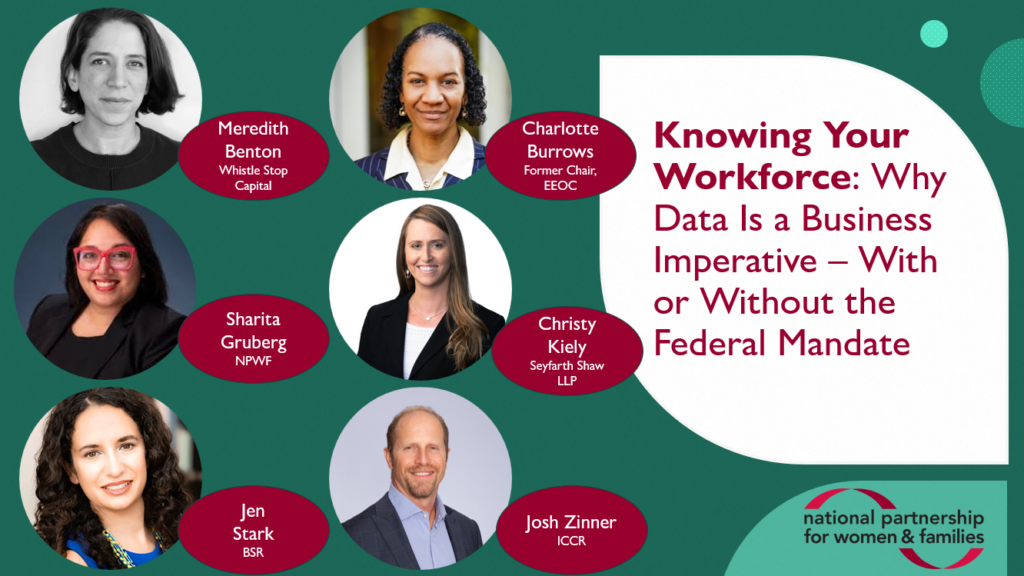
That is the conversation we convened on July 29, bringing together regulatory, business, legal and civil rights experts to unpack what employers should do next.
For employers, the pull is obvious: one less form. One less thing to file, one less deadline, one less line on the compliance calendar.
But “one less form” and “one less reason to know your workforce” are not the same sentence.
The first is a small administrative convenience. The second is a decision to operate with less information about your own organization – and the gaps that creates don’t necessarily show up next quarter. They show up years later, when you’ve lost the baseline you need to understand what’s changing inside your workforce.
Once you’ve stopped collecting, you can’t recreate those years of history.
The real question is: do you let the muscle atrophy – or decide that knowing your workforce was never really about the form?
Here’s the reframe: this data is a compass, not a weapon.
Every business measures what it considers important: sales, retention, customer satisfaction, productivity. Workforce demographics belong in that same category – not because the government asks for them, but because leaders need visibility into the organizations they’re running.
Treated as compliance, workforce data gets filed once a year and forgotten. It answers one question – “are we legal?” – and its perceived value disappears the moment the mandate does.
Treated as intelligence, the same data does something else entirely. It can tell you whether recruiting investments are expanding your talent pool, whether strong hiring numbers translate into retention, whether representation at hire survives to promotion and whether pay outcomes differ across your workforce. Those aren’t just compliance questions – they’re business questions.
And increasingly, they’re technology questions too. As employers put more AI and automated tools between people and decisions about hiring, performance and advancement, understanding who those systems are working for – and who they aren’t – becomes more important, not less. You can’t evaluate outcomes you aren’t measuring.
Ultimately, the data helps answer something much more useful than “are we compliant?”: Are our systems actually working the way we think they are?
Employers who treated the EEO-1 as their entire workforce data strategy missed much of the value of the data in the first place.
Many employers have long collected more nuanced information, measured additional dimensions of their workforce and used that data to inform recruiting, retention, promotion and pay practices. Internal self-identification can capture a more complete picture of today’s workforce than the federal form requires, while workforce analytics can follow what happens to employees long after the point of hire.
For those companies, the EEO-1 was never the workforce data strategy – it was one output of it.
The federal government may decide it no longer wants employers to submit this particular report. That doesn’t make the underlying information less valuable to the businesses already using it to understand and manage their workforce.
You don’t know what questions you’ll need this data to answer five years from now. A longitudinal dataset preserves your ability to look backward and understand what changed. Once those years are gone, they’re gone.
There is also a difference between having workforce data and being willing to use – and share – what it tells you.
For employees, that starts with the collection itself. If you’re asking workers to voluntarily tell you about their identities, they deserve to understand why you’re asking, how the information will be protected and what you intend to do with it.
Employers also choose to share demographic information the federal government never required them to make public. That doesn’t mean every employer needs to publish every data point. But there is business value in closing the loop: telling workers what you’re learning, showing where the data is informing decisions and giving employees a reason to keep participating.
There’s an external audience for this information too. Workforce data gives investors, prospective employees and other stakeholders something more concrete than commitments against which to measure a company’s progress. The federal reporting requirement may disappear. The demand for credible information about how companies manage their people won’t.
The most tempting posture right now may be to pause and see how the proposal shakes out. But “wait and see” comes with costs – and for many employers, it’s a choice made without checking what’s still on the books.
Federal reporting is only one piece of the legal landscape. State and global requirements remain, as do underlying federal recordkeeping obligations. The legal landscape alone is reason enough not to flip a switch.
But if workforce data helps you make better decisions about your people and your systems, voluntarily giving up that visibility is a strange definition of regulatory relief.
What employers should do now
Keep collecting. Don’t lose the baseline you need to understand how your workforce changes over time.
Use what you collect. Look beyond compliance to what the data tells you about hiring, retention, advancement and your workforce systems.
Build trust around it. Tell employees why you’re collecting the data, how it’s being used and what you’re learning. Consider what you can responsibly share more broadly.
Know what’s still required. Federal reporting is only one part of the legal landscape.
Sixty years of a federal data practice may be on the table. But the business question is bigger than whether the form survives.
Knowing who’s in your workforce, what’s happening to them and whether your systems are working as intended isn’t paperwork. It’s knowing your business.
The employers who understand that distinction now won’t find themselves rebuilding a baseline later. They’ll already have one.
Listen to the Lawyers
Across management-side firms, the advice is remarkably consistent: don’t assume the end of EEO-1 reporting means employers should stop collecting workforce demographic data. The reasoning generally falls into four buckets: other legal and recordkeeping obligations remain; the data can be valuable in assessing and defending employment practices; the rescission isn’t final; and for many employers, the data serves business purposes beyond the federal filing itself.
- Husch Blackwell: Should Employers Keep Collecting Workforce Demographic Data?
- Foley & Lardner LLP: With the EEOC Poised to End EEO-1 Reporting, What’s Next for Employers?
- JacksonLewis: EEOC Signals End to Key Federal EEO Reporting Mandates: Timing Uncertain + State Obligations Remain
- MorganLewis: EEOC Proposes Rescinding Employer Data Reporting Requirements
- Seyfarth Shaw: EEOC Proposes Rescission of Annual Reporting Requirement: What Employers Need to Know Now
- Sullivan & Cromwell: EEOC Advances Proposal to Rescind Annual Workforce Demographic Data Report