Bills Cracking Down on Abortion Pills Advance in States That Already Ban Most Abortions
Rewire News Group, February 4, 2026
According to an estimate by the Guttmacher Institute, nearly 200 anti-abortion bills have been introduced in 29 states. Efforts to restrict access to abortion medication are in full swing, particularly in states with abortion bans. Kimya Forouzan, Guttmacher’s principal policy adviser for state issues, said, “In 2026, medication abortion remains one of the central battlegrounds in the fight over reproductive autonomy, with policymakers in several states pushing bills that would criminalize patients, restrict telehealth and mailing, and even misclassify abortion pills as controlled substances or environmental hazards.”

Galveston Man Sues California Doctor Under New Texas Law Allowing Lawsuits Over Abortion Pills
The Texas Tribune, February 2, 2025
A Texas man, Jerry Rodriguez, filed a lawsuit against a California doctor for allegedly providing abortion medication to his partner. Rodriguez is seeking $75,000 in minimum damages and for the doctor to stop prescribing or providing abortion medication in Texas. Rodriguez amended his original lawsuit filed in July to include House Bill 7, which allows private citizens to sue anyone who manufactures, distributes, mails, or provides abortion medication to or from Texas. The bill’s opponents have called it a “bounty hunter law” because successful plaintiffs would be awarded at least $100,000 in damages.
These States Voted To Protect Abortion Rights. Conservative Lawmakers Are Not Standing Down
The Guardian, February 2, 2026
Legal battles over ballot measures that were meant to expand abortion are occurring in Missouri, Arizona, Michigan, Montana, Nevada, and Ohio. In some of these states, experts say, lawmakers have also introduced legislation that would undercut the will of voters who passed the measures. At least three states will vote on pro-abortion-rights ballot measures in November. Advocates hope they’ll join the 12 states that passed such measures after the fall of Roe v. Wade, but are warning that the fights that have followed prove that such measures are not a panacea, given the obstacles that decision-makers can throw up.
After Years of Silence, Texas Medical Board Issues Training for Doctors on How To Legally Provide Abortions
ProPublica, February 5, 2026
For the first time since Texas criminalized abortion, the state’s medical regulator is instructing doctors on when they can legally terminate a pregnancy to protect the life of the patient – guidance physicians have long sought as women died and doctors feared imprisonment for intervening. The new training from the Texas Medical Board comes nearly five years after the state passed its strict abortion ban in 2021, threatening doctors with severe penalties. ProPublica’s reporting has shown that pregnancy became far more dangerous in the state after the law took effect: Sepsis rates spiked for women suffering a pregnancy loss, as did emergency room visits in which miscarrying patients needed a blood transfusion; at least four women in the state died after they didn’t receive timely reproductive care.
Fear of ICE Is Keeping Pregnant Immigrants in Minnesota From Critical Care
The 19th, January 30, 2026
Healthcare providers in Minnesota have said that people are increasingly skipping prenatal visits due to the Immigration and Customs Enforcement (ICE) raids, where federal agents have killed two people. Six providers in the Twin Cities area said no-show rates have increased for prenatal visits, which are essential in detecting, treating, and preventing complications such as gestational diabetes, preeclampsia, and even stillbirth. Some patients are changing their delivery plans to opt for home births due to fears of encountering law enforcement officials.
ICYMI: In Case You Missed It
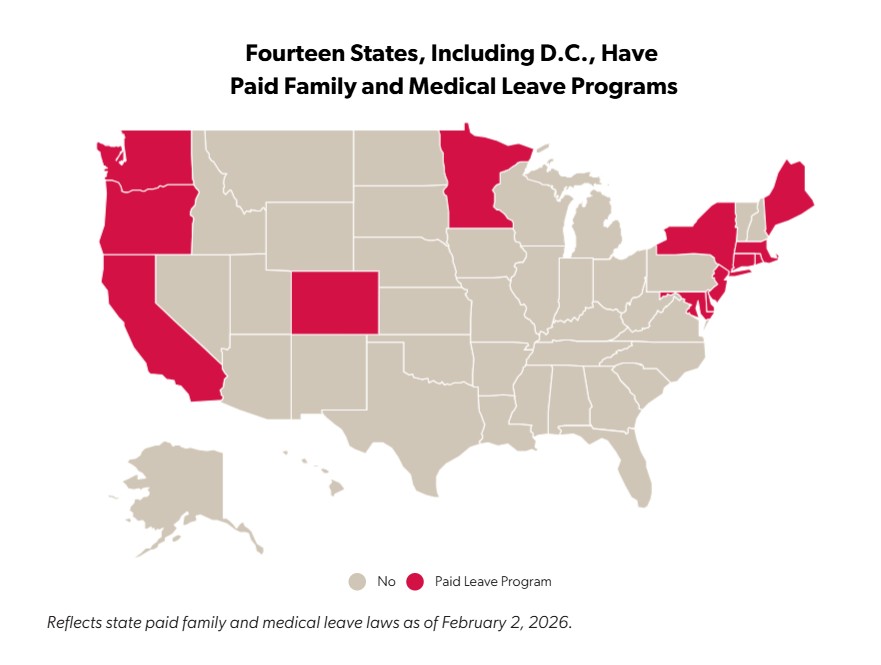
Most working people in the United States – 73 percent, or more than 100 million people nationwide – do not have paid family leave through their jobs.
Read the Paid Leave Means a Stronger Nation report here.
We respect your privacy. Read our policy.
Note: The information contained in this publication reflects media coverage of women’s health issues and does not necessarily reflect the views of the National Partnership for Women & Families.