Natrona County Judge Grants a Block on Six-Week Abortion Ban
Wyoming Public Radio, April 24, 2026
A Natrona County judge has granted a temporary restraining order on Wyoming’s six-week abortion ban. This means that abortion is legal once again in the state. In March, the Wyoming Legislature passed the law, which restricts most abortion care. In late March, a group of abortion rights supporters sued the state, arguing the partial ban is “vague” and “arbitrary” and that it violates the Wyoming Constitution. For almost two months, many patients have been driving to Colorado or Montana for care.

A Tennessee Woman Needed An Abortion To Save Her Life. She Then Joined A Lawsuit Against The State’s Ban
The Guardian, April 27, 2026
After she had to travel out of state to access care, Rachel Fulton joined the Center for Reproductive Rights’ suit, which an appeal has now halted indefinitely. Fulton joined a lawsuit, along with five other patients, in 2023 against the state of Tennessee for violating their right to life. The trial was set to begin on Monday, but a last-minute appeal halted the proceedings indefinitely. The case illustrates the way state-level abortion bans and restrictions are endangering women’s health, even in places where exceptions for patients’ lives are supposed to be in place, said Linda Goldstein, lead attorney at the Center for Reproductive Rights.
Abortion Isn’t *The* Issue In 2026. But It’s Still Definitely *An* Issue.
The 19th, April 29, 2026
The economy and the cost of living are driving voters’ concerns and Democratic campaigns’ messaging going into the 2026 midterms. But abortion is still shaping messaging in state-level and especially state supreme court elections. Several Democratic strategists and abortion rights advocates told The 19th it could be a more prominent issue in the midterms than many expect. Abortion has been a top issue in recent state Supreme Court races in Pennsylvania and Wisconsin, battleground states with divided government and no citizen-led ballot initiative process, where the courts often have the last word on major constitutional issues like abortion.
Abortion Is An Economic Issue Republicans Aren’t Ready To Face
The Hill, April 30, 2026
New research shows that voters connect reproductive freedom to the economic pressures that weigh on their shoulders every day. Reproductive Freedom for All found that 82 percent of voters say it has become harder to afford to raise children than it was five or ten years ago — and more than half say it is much harder. Nearly three in four say their personal financial situation is a major factor in deciding whether to have a child. Voters understand that deciding when to have a child is deliberate. Reproductive freedom — from access to contraception and family planning to paid leave policies that let parents stay in the workforce after having a child — is what allows people to build a solid foundation.
The Supreme Court Just Made It Harder to Investigate Anti-Abortion Crisis Pregnancy Centers
Mother Jones, April 29, 2026
In an outcome that was widely expected, the US Supreme Court ruled Wednesday that New Jersey’s efforts to investigate an anti-abortion crisis pregnancy center for allegedly misleading consumers violated the First Amendment. In a 9-0 decision, the justices said a sweeping subpoena by the state’s then-attorney general, Matthew Platkin, seeking information about donors to First Choice Women’s Resource Centers, a chain of anti-abortion pregnancy centers in northeastern New Jersey, “burdened First Choice’s associational rights.”
ICYMI: In Case You Missed It
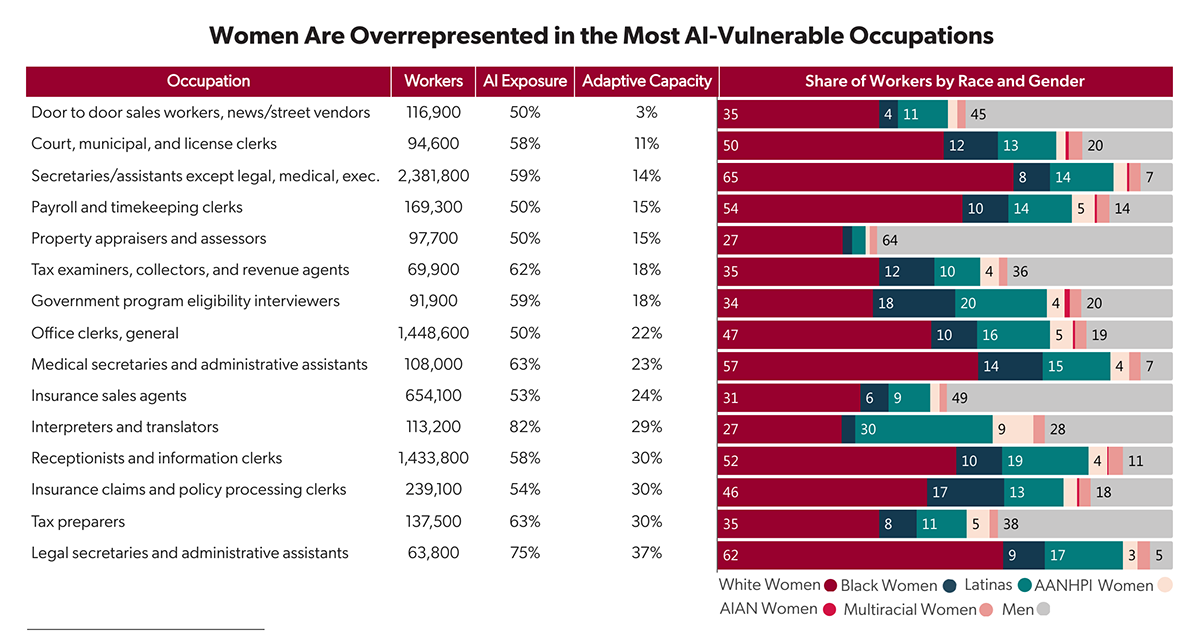
Artificial intelligence (AI) is reshaping labor markets and work in ways that will profoundly affect women workers, who comprise almost half the workforce yet face distinct vulnerabilities and opportunities with the growth of AI. Our new issue brief, AI and Emerging Risks for Women Workers, reviews existing research on the impact of AI for women workers and provides new data on how women workers are overrepresented in occupations where they may be particularly affected by AI in the workplace.
We respect your privacy. Read our policy.
Note: The information contained in this publication reflects media coverage of women’s health issues and does not necessarily reflect the views of the National Partnership for Women & Families.