
Blog

Debunking Myths and Misinformation in the Health Reform Debate

| Aug 31, 2009

(Read time: )

It is always a terrible shame when politics gets in the way of the imperative to meet the health care needs of women.

At the National Partnership, we remain fully committed to health care reform that guarantees universal access to high quality, affordable reproductive health services – including family planning, maternity care, and abortion. Despite the importance of these services to women, reproductive health has – predictably enough – emerged as a divisive issue in the ongoing health care reform debate.

Specifically, anti-choice politicians and advocacy groups have ramped up efforts to use health care reform as a vehicle to undermine access to abortion services, although much of what is being said about abortion coverage bears little relationship to the actual proposals being debated in Congress. In reality, abortion coverage is not mandated by any of the four bills that have been marked up in the House and Senate – despite high-pitched assertions to the contrary.

Three of the four bills considered by House and Senate Committees to date merely allow reproductive health services to be treated the same as all other primary care health care services – meaning that an advisory committee or the HHS secretary would make a determination about coverage. The more conservative House Energy and Commerce committee approved a bill which takes a dramatically different approach – one designed to reflect an abortion truce that maintains the status quo at best. The legislation passed by that Committee addresses abortion coverage most explicitly – and in fact makes clear that abortion services cannot be included in the essential benefits package that plans would be required to offer.

The Energy and Commerce Committee legislative language clearly states that health plans participating in exchange are neither prohibited nor required to include abortion coverage. Instead, the Committee language is designed to allow women to retain the type of coverage they currently have. Consistent with current practice in the private health insurance market, the amendment authored by Representative Lois Capps (D-CA) would allow – not require – insurers to sell policies to individuals and some small businesses through a national insurance exchange that include abortion coverage.

The Capps language also addresses concerns that plans participating in the exchange that receive federal dollars not use those government funds to pay for coverage of abortion services by requiring that coverage for any abortion services provided for reasons other than those allowed under the Hyde amendment (rape, incest or danger to the woman s life) be paid for out of private premiums. Under the Capps language, both public and private plans could cover abortion services – but with private dollars. In addition, the Capps amendment would not pre-empt state laws regulating abortion and restrictions on state Medicaid coverage of abortion would continue – meaning that the federal funds could not be used to provide abortion services except in cases of rape, incest or danger to the woman s life.

It is always a terrible shame when politics gets in the way of the imperative to meet the health care needs of women. For women, reproductive health services are basic health services, and lawmakers should remember that. Efforts to limit coverage of abortion services are really attempts to deny women access to health care services that are legal, necessary, and that one-third of American women will need during the course of their reproductive lives.

About the Author

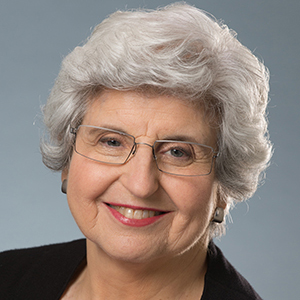
Judith L. Lichtman

Judith L. Lichtman

Judith L. Lichtman has been a guiding and influential force in the women's movement for more than 40 years. She stepped down as president of the National Partnership for Women & Families in 2004, and is presently senior advisor at the National Partnership. Her commitment, vision, and talent as an attorney and advocate have made a profound difference for women and families across the United States.

Lichtman often says: "I went to law school because being a lawyer gave me a license for activism." After receiving her law degree from the University of Wisconsin in 1965, Lichtman worked for the Department of Health, Education and Welfare, Jackson State College, the Urban Coalition, the U.S. Commission on Civil Rights, and as legal advisor to the Commonwealth of Puerto Rico. In 1974, Lichtman became the executive director and first paid staff person for the Women's Legal Defense Fund (WLDF), which became the National Partnership for Women & Families in February 1998.

Under Lichtman's leadership, the National Partnership has been at the forefront of every major piece of civil rights legislation related to women and families for more than 40 years. Founded as a small volunteer group, the National Partnership has grown into a national organization with thousands of members and has become one of the country's most influential strategic forces, shaping national policy through its advocacy, lobbying, litigation, and public education. Lichtman's vision and the National Partnership's strength and direct leadership have resulted in the passage of some of the most important legal protections for American women and families, including the Pregnancy Discrimination Act of 1978 and the Family and Medical Leave Act (FMLA) of 1993. In 1996, the National Partnership helped shape key provisions of the Health Insurance Portability and Accountability Act (HIPAA) that make it easier for women and their families to get and keep health coverage. More recently, Lichtman has led efforts to promote patient protections and to bring paid family and medical leave to California.

Lichtman has been recognized by civic and legal organizations, business and labor leaders, and others for her strategic abilities, political savvy, effectiveness in creating powerful and diverse coalitions, and her tireless commitment to building a truly just society. President Clinton called Lichtman "a remarkable national treasure," and Washingtonian magazine has identified her as one of Washington, DC's most powerful women and Washingtonian of the Year in 1986. The Sara Lee Corporation awarded her the 1989 Frontrunner Award in the area of Humanities. That same year, the Women's Bar Association named her Woman Lawyer of the Year. In 2000, Lichtman received the Leadership Conference on Civil Rights Hubert H. Humphrey Award for her contributions to the advancement of human and civil rights.

Says Lichtman, "For over 40 years, I've tried to make this world a better place for women and families. We've come a long way, but our work is far from done. My daughters, and all our children, deserve a future where every school and workplace is truly free of discrimination, and where all families have the support they need to succeed at home and on the job. I know from experience – if we can imagine it, we can make it happen."

Lichtman lives in Washington, D.C., with her husband Elliott. They have two married daughters and four grandchildren.