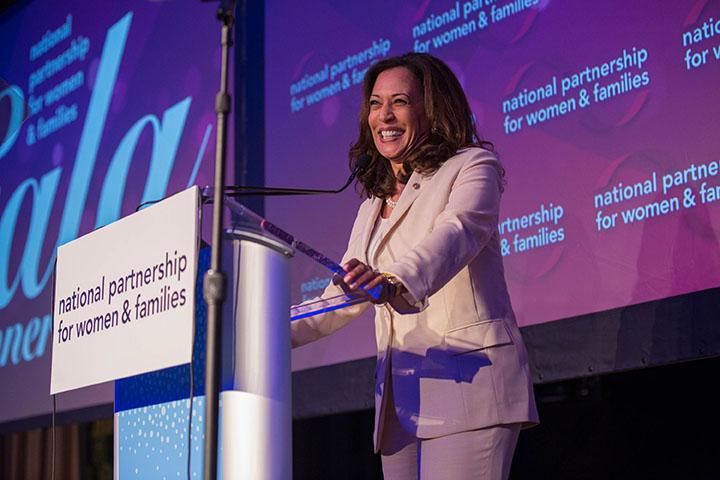
Today, women across the country still routinely face inequality at home, at work and throughout society. And too often, the issues we care most about seem not to matter.


Today, women across the country still routinely face inequality at home, at work and throughout society. And too often, the issues we care most about seem not to matter.

The preeminent medical journal The Lancet has just released its Midwifery Series, a major project to take stock of the contribution of midwifery to the well-being of childbearing women and newborns.

Oklahomans pride themselves on the way our citizens pull together in emergencies and tragedies. But many residents, unfortunately, also like to call ours the most conservative state.
Mother’s Day is here. That means that if you’re like many people, you’ve recently spent some time asking yourself what your mother (or the mothers in your life) need.
As Mother’s Day approaches, we’re making it easier for women to manage their families’ health by providing tools and information to help them use their health insurance to access affordable, quality care and to make the best possible health care choices.

As Mother’s Day approaches, we renew our commitment to improving the quality of maternity care so women can enjoy safe, satisfying pregnancies and births, and babies can have a healthy start in life. We ask you to join us.
In good news for patients and families, the federal government recently took two important steps to increase transparency. These actions exemplify a changing health care culture that recognizes the need for openness.
At the National Partnership, we couldn’t be more inspired to make history on the issues of paramount importance to women and their families.
Budgets reflect priorities. Last week, House Budget Chairman Rep. Paul Ryan (R-WI) released the House Republican budget. If adopted, it would take health insurance away from millions of Americans, turn Medicaid into a block grant, and put seniors’ access to comprehensive Medicare coverage in jeopardy.
The quality of maternity care in our country needs improvement. While transforming the maternity care system will take time, there is progress to report.

This week, the U.S. Supreme Court heard oral argument in two cases brought by for-profit corporations challenging the Affordable Care Act’s (ACA) birth control benefit, which requires that health plans include coverage for contraception – a basic health service that 99 percent of women use at some point in their lives.
The ACA has already begun improving the lives of women and families across the country, but we still have work to do.

Access to contraception long seemed settled and remote from the culture wars.

For decades, cost has been a major barrier that prevented tens of millions of Americans from accessing health insurance.
Por décadas, el costo ha sido el mayor obstáculo que ha impedido que millones de personas en los Estados Unidos obtengan acceso al seguro médico.
With demand on the rise for measures that will make our country more healthy, fair and family friendly, the National Partnership convened a special congressional briefing to discuss the policies women and families want this year.

On February 4, dozens of allies met on the steps of the Louisiana Department of Health and Hospitals (DHH) in Baton Rouge to do something that we rarely get to do on the harsh battlefield of reproductive justice work in Louisiana – celebrate a victory.

Being a working parent is hard. Just last week, my son was in tears as I left at dawn for an overnight trip.
Shopping for insurance through your state marketplace? These four questions will help you pick a plan.
While the ACA is, indeed, a health policy, it’s also a policy that offers badly needed support to working families.