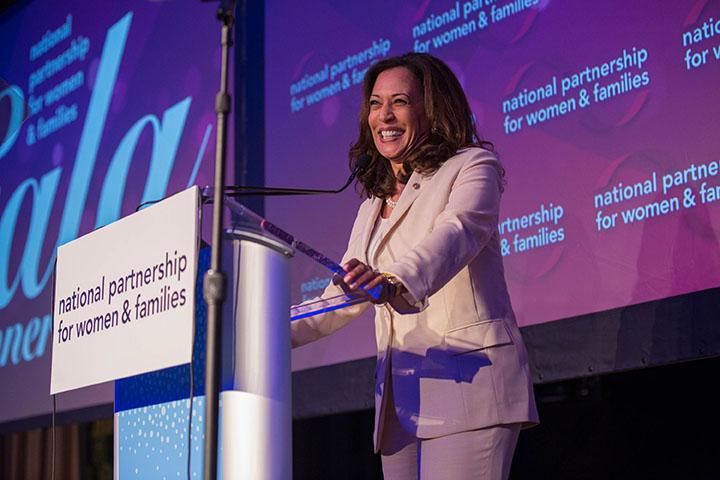
In swing states with vulnerable Democratic senators up for re-election in 2024, the party is already hammering likely opponents over abortion rights – even though most of those Republicans haven’t yet decided if they’re running.

In swing states with vulnerable Democratic senators up for re-election in 2024, the party is already hammering likely opponents over abortion rights – even though most of those Republicans haven’t yet decided if they’re running.
One year after the Supreme Court overturned Roe v. Wade, putting an end to the constitutionally protected right to access abortion, the health care landscape has become increasingly fragmented and complex to navigate, spawning widespread confusion.

As a Black woman, AND mother, AND Deep South native, I know firsthand that Black maternal health and reproductive health are indivisible. The fall of Roe v. Wade amplified the and not or of the critical importance of fully realized reproductive justice…

The last year has been devastating. Even though advocates in the reproductive health, rights, and justice movement have been sounding the alarm for years – decades, even – about what the fall of Roe v. Wade would mean, I wasn’t prepared for what that would actually look like. But as we mark one year since the Dobbs decision, I am choosing – despite everything – to lean into optimism, to believe in and build toward a future where abortion is truly available to everyone.
Sami Stroebel, an aspiring obstetrician-gynecologist, started medical school at the University of Wisconsin in Madison last summer within weeks of the Supreme Court’s decision to overturn the constitutional right to an abortion.
In January, the South Carolina Supreme Court struck down restrictions on abortion early in pregnancy, finding the law violated the right to privacy in the state constitution. But the state’s highest court likely isn’t done ruling on abortion.
“A federal appeals court on Wednesday seemed prepared to limit access to a key abortion medication first approved more than two decades ago, expressing deep skepticism that the government followed the proper process when it loosened regulations to make the pill more readily available.”
“A federal appeals court on Wednesday seemed prepared to limit access to a key abortion medication first approved more than two decades ago, expressing deep skepticism that the government followed the proper process when it loosened regulations to make the pill more readily available.”
“A federal appeals court on Wednesday seemed prepared to limit access to a key abortion medication first approved more than two decades ago, expressing deep skepticism that the government followed the proper process when it loosened regulations to make the pill more readily available.”

This time of year, there’s a lot of talk about what moms need – and unfortunately, not enough action – so we figured we’d offer a little bit of help.
“South Carolina and Nebraska, two conservative states that have been pushing to ban abortion, on Thursday both failed to pass new bills prohibiting the procedure, preserving wide access to abortion in those states and handing surprise victories to abortion rights advocates.”

Inclusive, comprehensive data on racial and ethnicity is essential for gender justice and the work of the National Partnership.
“South Carolina and Nebraska, two conservative states that have been pushing to ban abortion, on Thursday both failed to pass new bills prohibiting the procedure, preserving wide access to abortion in those states and handing surprise victories to abortion rights advocates.”

The Supreme Court issued a stay in the Texas mifepristone case on Friday, April 21, pressing the “pause” button on the recent lower court decisions and allowing mifepristone to remain available pending a full appeal. Although this is welcome news, it is frightening that Americans came so close to losing access to this safe, effective medication — and may yet still.

As we celebrate Earth Day and reflect on the steps we can all take to protect our planet, it’s important to highlight that climate change doesn’t impact everyone equally. Decades of racist policies – from housing to infrastructure to economic policies – often restricted low-income communities and communities of color to areas with more environmental hazards and heavy pollution.
The Supreme Court initially gave itself a deadline of Wednesday to decide whether women seeking access to a widely used abortion pill would face more restrictions while a court case plays out. But on the day of the highly anticipated decision the justices had only this to say: We need more time. In a one-sentence order, the court said it now expects to act by Friday evening.
“Twice as many independent abortion clinics have closed so far in 2022 compared to the year before as facilities shutteredin the wake of the Supreme Court’s decision this year to overturn Roe v. Wade, according to an association for independent abortion care providers.”
“Each year since 1973, abortion rights activists have gathered on Jan. 22 for “Roe v. Wade Day” to celebrate the Supreme Court decision that granted a constitutional right to abortion. But now, 50 years after the decision, Roe v. Wade Day will be different: Sunday will also mark the first anniversary of Roe since the ruling was overturned.”

In an effort to support expanding access to birth control coverage under the Affordable Care Act, the National Partnership joined others across the movement in reproductive health, rights, and justice in a comment letter to the Centers for Medicare and Medicaid Services (CMS).
A federal judge in Texas struck down a provision of the Affordable Care Act that required coverage for a range of preventive services — including for cancer screenings, medications and more…